
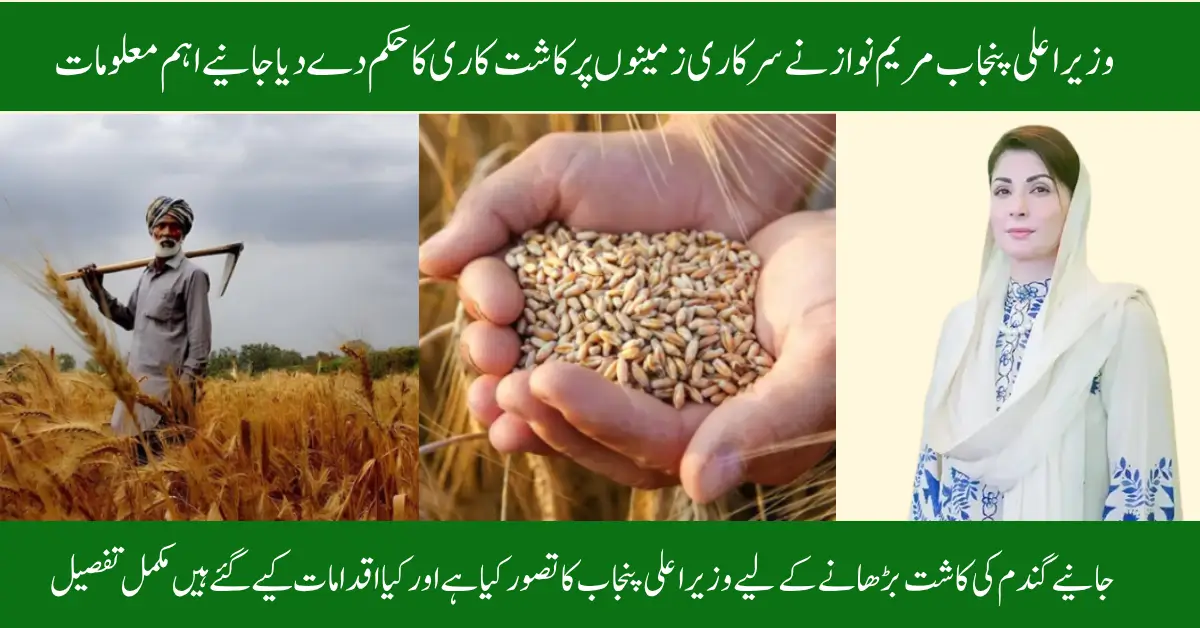
CM State-Owned Lands Wheat Farming
In a bold move to strengthen Punjab’s agricultural backbone, the Chief Minister has issued a directive to cultivate wheat across all available government-owned lands using high-quality seeds. This initiative underscores the government’s commitment to improving food security, maximizing use of public resources, and boosting rural productivity. Integrated with initiatives like the electrobus system and flood preparedness, this vision reflects a holistic push toward a greener, more resilient Punjab.
Suthra Punjab Workers Scheme 2025: Apply Now and Claim Your Benefits Today
Key Highlights of the Chief Minister’s Directive
- Wheat cultivation on state farmland: All government agricultural land will be used for wheat growing.
- Use of quality seeds: Only certified, high-yield seed varieties will be distributed.
- Supporting infrastructure projects: Expansion of the electrobus network, improved road safety, and flood-monitoring systems.
- Transparency and public welfare: Open data collection, monitoring, and enforcement of bread price standards.
- Other priorities: Maintenance of 5,000 water filtration plants, control of stray dog incidents, and acknowledging teachers’ contributions.
This directive marks a shift toward sustainable, accountable, and inclusive governance in Punjab.

Background: The Need for Increased Wheat Production
Punjab is under pressure to elevate wheat output as domestic demand rises and climate volatility cuts into yields. By harnessing unused government land and deploying modern cultivation methods, the government aims to reduce reliance on imports and protect the agricultural sector.
Wheat is not only a staple food but also a crucial cash crop in Punjab. Yet challenges such as unpredictable weather, rising input costs, and inefficient land use threaten growers’ returns. This new policy seeks to turn state land into productive assets that support farmers and secure the province’s food supply.
CM Punjab Flood Relief Card 2025: Online Registration Open for Immediate Financial Aid
Scope of Implementation
To roll out this initiative successfully, the government will:
- Utilize all state-owned farmland for wheat cultivation
- Assign the Agriculture Department to oversee operations
- Distribute high-yield certified seeds to planting sites
- Introduce modern irrigation and farming techniques
- Require district administrations to report field progress
- Ensure data transparency and accountability across all phases
This framework aims to assure consistency, productivity, and fairness in execution.
Government’s Implementation Plan
The government has put in place a structured, phased plan:
- Provincial leadership by the Agriculture Department
- District-level planning to ready land and manage logistics
- Seed and equipment supply, ensuring every plot is ready
- Use of advanced machinery and irrigation for maximum yield
- Regular inspections to identify and solve problems early
- Data-driven tracking to verify results and adjust strategies
This approach blends top-down oversight with localized management to drive success.
BISP 2025 Quarterly Payment Status Check Using New CNIC Method
Expected Benefits
When fully implemented, this campaign promises a variety of gains:
- Higher wheat yields to satisfy growing demand
- Reduced wheat imports, strengthening food sovereignty
- Better utilization of public agricultural land
- New income streams and jobs for rural communities
- Promotion of sustainable and modern farming across Punjab
- Strengthening of the agricultural economy for the long term
Altogether, this effort could reshape the future of food and farming in Punjab.
Expert Opinions and Public Reaction
The initiative CM State-Owned Lands Wheat Farming has drawn favorable responses from experts and citizens alike. Agricultural analysts praise it as a forward-looking plan essential for long-term food stability. Economists note it may help manage resources better and reduce import bills. Farmers appreciate the support in seeds, land, and infrastructure.
Environmental advocates welcome the sustainable approach. Citizens see it as a promise of more food availability and local jobs. Some voices urge transparent monitoring to ensure fair implementation. Overall, the plan is seen as a smart step toward self-reliance.
BISE Lahore 11th Class Result 2025 Released Find Your Marks Online Now
Summary Table: Punjab’s Wheat Farming on State-Owned Lands
| Category | Details |
|---|---|
| Initiative Name | Wheat Cultivation on State-Owned Lands |
| Launched By | Chief Minister Maryam Nawaz Sharif |
| Launch Date | October 2025 |
| Purpose | Boost wheat production, enhance food security, and utilize government land |
| Implementation Lead | Punjab Agriculture Department |
| Supporting Authorities | District Administrations |
| Key Actions | Use of high-yield seeds, modern machinery, and transparent monitoring |
| Target Area | All government-owned agricultural lands across Punjab |
| Expected Benefits | Higher yields, reduced wheat imports, farmer support, job creation |
| Other Associated Initiatives | Electrobus system, flood preparedness, bread price enforcement |
| Monitoring Method | Data collection, field inspections, and departmental coordination |
| Beneficiaries | Punjab citizens, farmers, rural communities |
12th Class Supplementary Exam 2025 Date Announced Full Schedule Inside
Frequently Asked Questions
What is the main goal of this program?
To increase wheat production by using unused government-owned lands effectively.
Who will manage this project?
The Punjab Agriculture Department in collaboration with district administrations will handle planning and execution.
When will cultivation begin?
Groundwork and land preparation will start ahead of the next Rabi sowing season.
How will this benefit private farmers and communities?
Farmers may get access to seed supply contracts, labor opportunities, and better local markets. Overall, it supports rural income and livelihoods.
How will this help Punjab’s economy?
It strengthens food security, lowers dependence on imports, and generates new economic activity in agriculture and allied sectors.
Conclusion
Punjab’s decision to cultivate wheat on state-owned lands underlines a vision of self-sufficiency, modernization, and inclusive growth. By leveraging government land with certified seeds, modern techniques, and robust oversight, this directive positions Punjab to confront food challenges and uplift its rural communities. More than a policy, it’s a step toward a green, resilient, and prosperous province that values both its land and its people.
BISP 8171 Cluster Payment 2025 How to Receive October Funds